Water-Tightness Testing Concrete Basins per ACI 350.1
The Problem
A water-tightness test on a concrete basin sounds simple: fill it, wait, measure the drop. The catch is that the water surface drops for reasons that have nothing to do with leaks. A big open basin evaporates measurably every day, rain adds water back, and new concrete drinks for its first several days full. Run the test naively and you'll fail a tight basin in August or pass a leaky one in a drizzle. ACI 350.1 structures the test so the number you compute is actually leakage [1].
The Approach
The correction comes first. The elegant version is the evaporation pan: float a calibrated pan of water in the basin, and it sees the same evaporation and rainfall as the basin surface, so the difference isolates leakage:
Δh = drop_basin − Δh_pan
Or measure the terms separately: Δh = drop_basin − evaporation + rainfall. The corrected drop converts to volume and normalizes to the standard 24-hour basis:
%/24hr = V_lost / V_test × (24 / t_hr) × 100
checked against the allowable percentage of volume per 24 hours from the spec. The tool also inverts the whole chain into the pre-test planning number: the allowable drop in inches over your test duration, so the crew knows before the test starts what reading means pass.
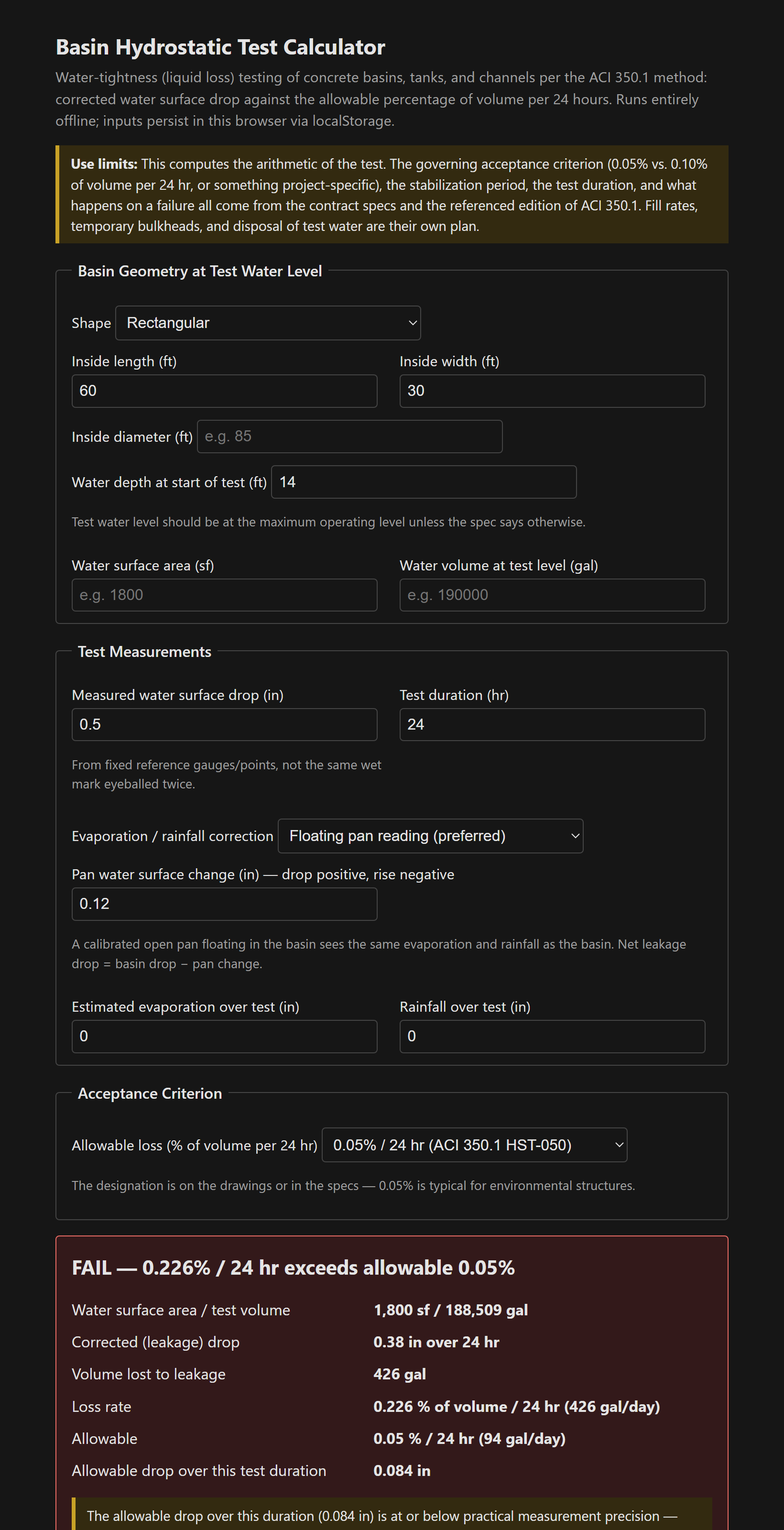
Two protocol points do most of the work of making the number defensible. First, stabilization: ACI 350.1 requires the basin sit full for a stabilization period (commonly 3 days) before the measured test starts, or an early “failure” is just absorption. Second, measurement precision governs duration: with a good hook gauge you can resolve about 1/16 in., so if the allowable drop over 24 hours is smaller than that, extend the test — the standard allows it for exactly this reason, and the tool flags allowable drops under a quarter inch.
Running the test so the numbers mean something
- Measure from fixed reference points at multiple locations, at the same time of day — thermal expansion of the water is real over a big surface.
- Valves and bulkheads count as leaks: a weeping plug valve fails the basin on paper. Isolate and verify them before blaming the concrete.
- Most specs distinguish acceptable exterior dampness from unacceptable flowing water regardless of the volumetric result — walk the walls, don't just read the gauge.
Single file, vanilla JS, localStorage persistence. The contract spec governs the criterion, stabilization period, and retest provisions; AWWA D110/D115 have their own tightness provisions for circular prestressed tanks [2][3].
The tool: Basin Hydrostatic Test Calculator.
References
- [1] ACI 350.1 — Specification for Tightness Testing of Environmental Engineering Concrete Containment Structures. https://www.concrete.org/
- [2] AWWA D110 / D115 — tightness testing provisions for circular prestressed tanks, where applicable.
- [3] Contract specifications — governing criterion, stabilization period, and retest provisions.