Previewing HTML Client-Side
Rapid prototyping of Hypertext Markup Language (HTML) typically requires a localized development server or iterative file saves coupled with browser refreshes. Implementing a synchronized editing context utilizing blob URLs and inline frames (iframes) mitigates these latency issues, creating a real-time, isolated rendering environment entirely within the host browser process.
This approach captures user input from a standard textarea node, converts the resultant string into a transient Blob object, and assigns the instantiated Object URL as the source reference for a sandboxed iframe. This architecture guarantees synchronous visual updates without the necessity for server round-trips [1].
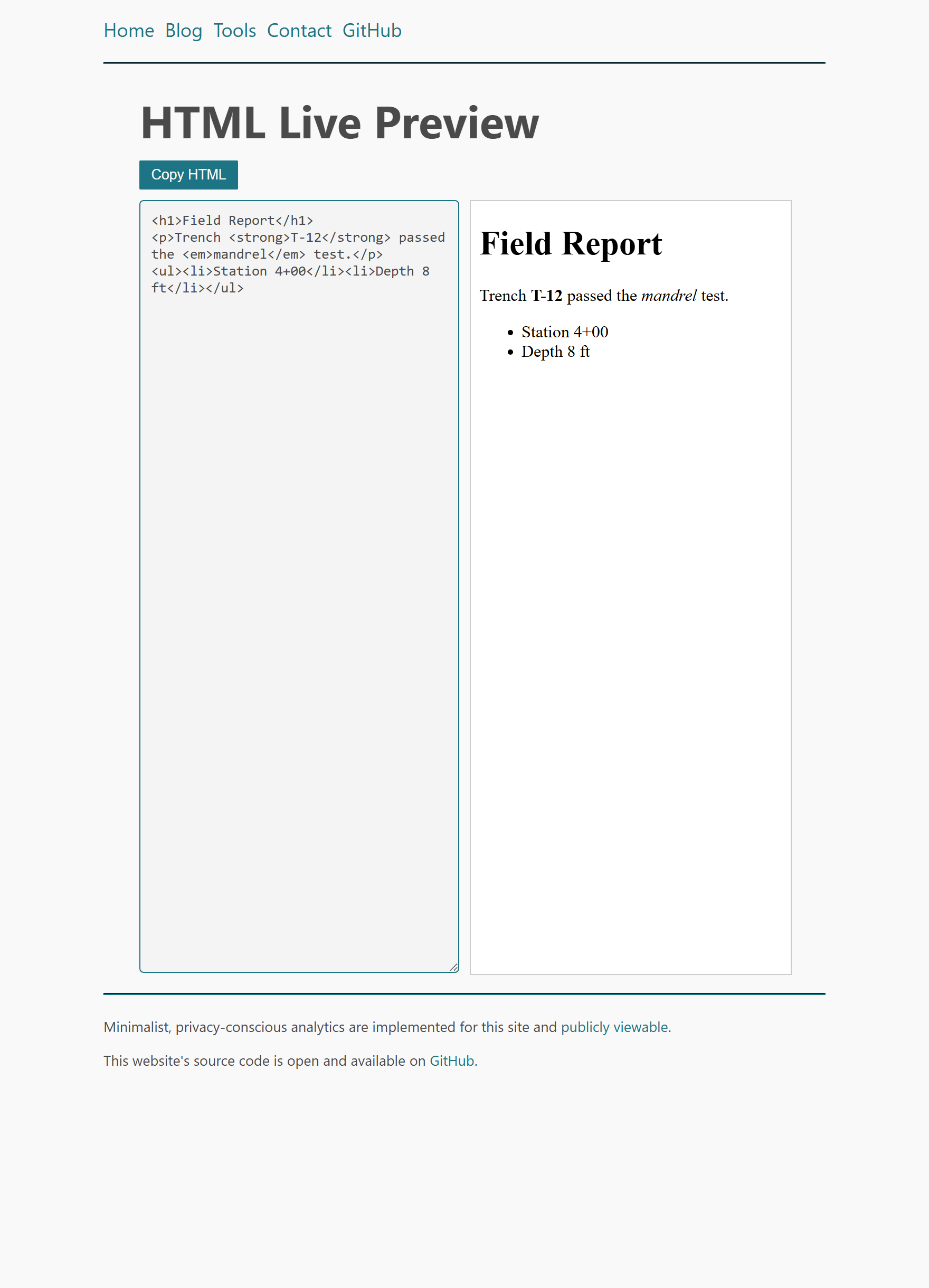
The implementation requires strict debouncing logic. A functional timeout wrapper is applied to the input event listener, preventing execution overhead during rapid keypress sequences. Furthermore, previously allocated Blob URLs are explicitly revoked from browser memory to prevent compounding memory leaks during extended sessions [2].
Generating static Blob strings
let blob = new Blob(["<h1>Hello World</h1>"], { type: 'text/html' });
let url = URL.createObjectURL(blob);
console.log(url);
References
- Willison, S. "HTML Live Preview". Available: https://tools.simonwillison.net/html-preview.
- Willison, S. "html-preview.html Source Code". Available: https://github.com/simonw/tools/blob/main/html-preview.html.